

 ไทย
 Français
 Русский
 Deutsch
 Español
 中文
 한국어
 日本語
Managing Tropical Pet Allergies and Itchy Skin in Thailand
Is your pet constantly scratching? Discover how Thailand's humid climate, pests, and environmental allergens affect your dog or cat, and learn practical tips to keep their skin healthy.

Boba
16 March 2026 · 5 min read
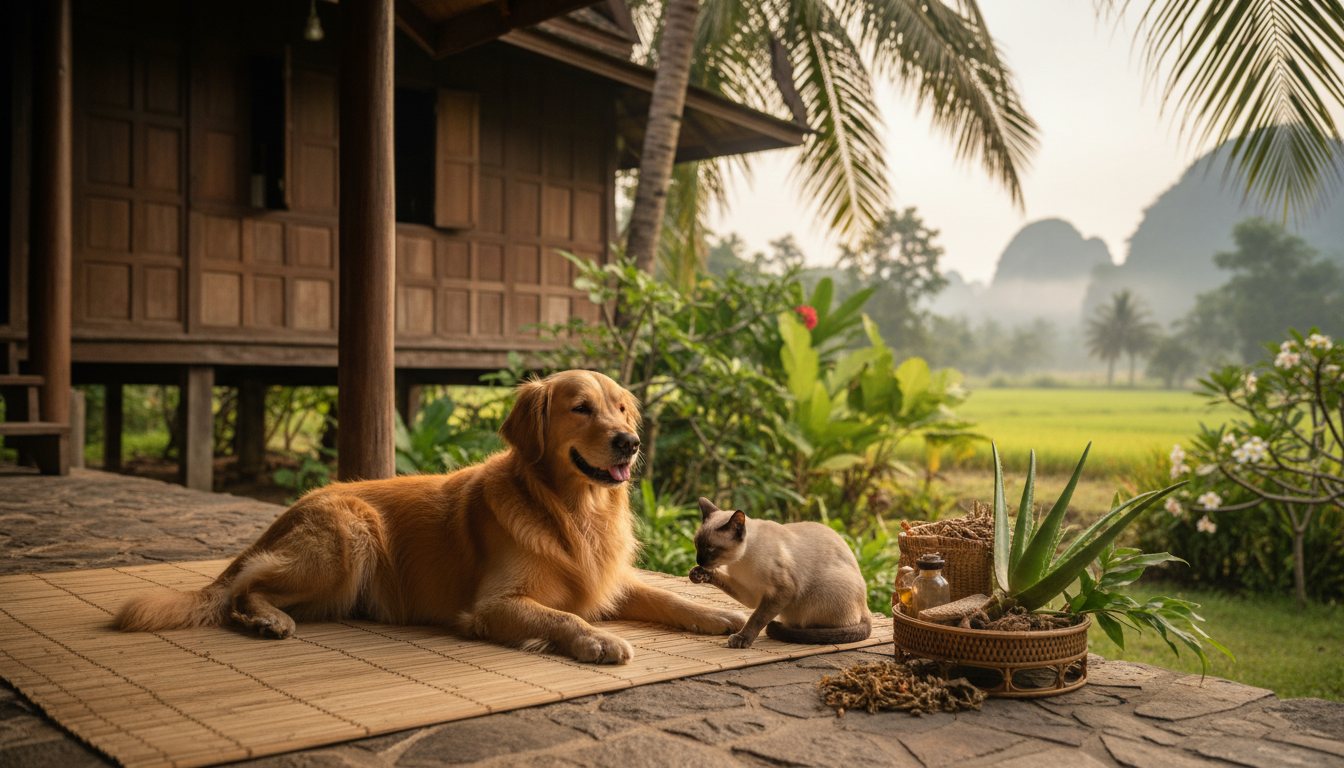
If you live in Thailand, you are likely familiar with the rhythmic sound of your dog or cat scratching behind their ears against the cool tiled floor. While an occasional scratch is perfectly normal, persistent itching, licking, and chewing are signs of distress. Our tropical climate is a paradise for beach-loving pups and sunbathing cats, but it is also a perfect storm for skin issues. High humidity, year-round warmth, and local flora can turn a minor skin sensitivity into a painful, weeping hot spot overnight. Understanding the unique environmental triggers in Thailand is the first step to keeping your four-legged companion comfortable and itch-free.

The Tropical Trigger: Why Thailand's Climate Affects Pet Skin
The primary culprit behind many pet skin issues in Thailand is the relentless humidity. During the monsoon season, and even during the hot season, relative humidity levels rarely drop below 70 percent. This moisture hangs in the air and gets trapped in your pet's fur, creating a warm, damp microclimate right against their skin. This environment is an absolute paradise for microscopic yeast and bacteria, which naturally live on your pet's skin but can multiply out of control when dampness persists.
Certain breeds face a higher risk. Short-nosed breeds with heavy facial folds, such as Pugs, French Bulldogs, and Persian cats, easily trap moisture in their wrinkles. Meanwhile, heavy-coated breeds like Siberian Huskies, Golden Retrievers, and Samoyeds—which are incredibly popular in Thai cities—struggle significantly in this climate. Without proper drying after a swim, a bath, or even a walk in the rain, these dense double coats lock in moisture, leading to acute moist dermatitis, commonly known as hot spots.
Environmental Allergies and the Outdoor Elements
Just like humans, pets can be allergic to things they inhale or touch. In Thailand, environmental allergens are present all year. Dust mites thrive in our humid homes, while tropical grasses, molds, and pollens from lush garden plants can trigger intense allergic reactions.
In major urban areas like Bangkok, or during the annual burning season in northern provinces like Chiang Mai, air pollution and high PM2.5 levels can also compromise your pet’s skin barrier. When the skin barrier is weakened, allergens penetrate more easily, leading to redness, itching, and secondary infections.
To help manage environmental allergies:
- Wipe your pet's paws, underbelly, and face with a damp, pet-safe cloth after outdoor walks to remove pollen and dust.
- Keep indoor areas well-ventilated, and consider using an air purifier with a HEPA filter to reduce dust mites and airborne allergens.
- Keep lawns trimmed and limit your pet's access to dense, wet undergrowth where mold spores and pollen accumulate.
Food Sensitivities in a Land of Flavor
While environmental factors are common, food allergies are another frequent cause of chronic itching. It is important to distinguish between a food allergy (an immune system reaction) and food intolerance (a digestive issue). In pets, food allergies usually manifest as itchy skin, particularly around the ears, paws, face, and rear end, often accompanied by chronic ear infections.
The most common food allergens for dogs and cats are animal proteins, such as chicken, beef, dairy, and wheat. In Thailand, it can be tempting to share delicious local dishes with our pets, but table scraps containing soy sauce, fish sauce, spices, or cooked poultry bones can trigger both allergic flare-ups and digestive emergencies.
If you suspect a food allergy, consult your veterinarian. They will likely recommend a strict elimination diet using a prescription hydrolyzed protein food or a novel protein source for eight to twelve weeks. This requires discipline, as your pet cannot have any treats, table scraps, or flavored medications during the trial.
The Constant Battle with Fleas and Parasites
Unlike temperate countries that experience freezing winters to naturally control insect populations, Thailand has a warm climate year-round. This means fleas, ticks, and mites are active 365 days a year.
Flea Allergy Dermatitis (FAD) is one of the most common causes of extreme itching in Thai pets. Pets with FAD are not just itchy from the physical crawling of bugs; they are highly allergic to flea saliva. A single flea bite can trigger a cascade of intense scratching, biting, and hair loss, particularly around the base of the tail and thighs.
- Year-round prevention is mandatory. Do not wait until you see a flea to apply treatment.
- Consult your vet to choose the best preventative medication (oral chews, spot-on treatments, or collars) suitable for your pet's weight and lifestyle.
- Regularly wash your pet’s bedding in hot water and vacuum your living spaces to eliminate flea eggs and larvae.
Bathing and Grooming in the Tropics
Finding the right bathing frequency for a pet in Thailand is a delicate balancing act. Bathing too often with harsh shampoos can strip the skin of its natural oils, leading to dry, flaky, and itchy skin. On the other hand, bathing too infrequently allows sweat, environmental allergens, and yeast to build up.
Generally, a bath every two to four weeks with a gentle, soap-free, hypoallergenic or oatmeal-based shampoo is ideal for healthy pets. If your pet has an active skin infection, your vet may prescribe a medicated shampoo containing antifungal or antibacterial agents, which typically needs to be left on the coat for ten minutes before rinsing.
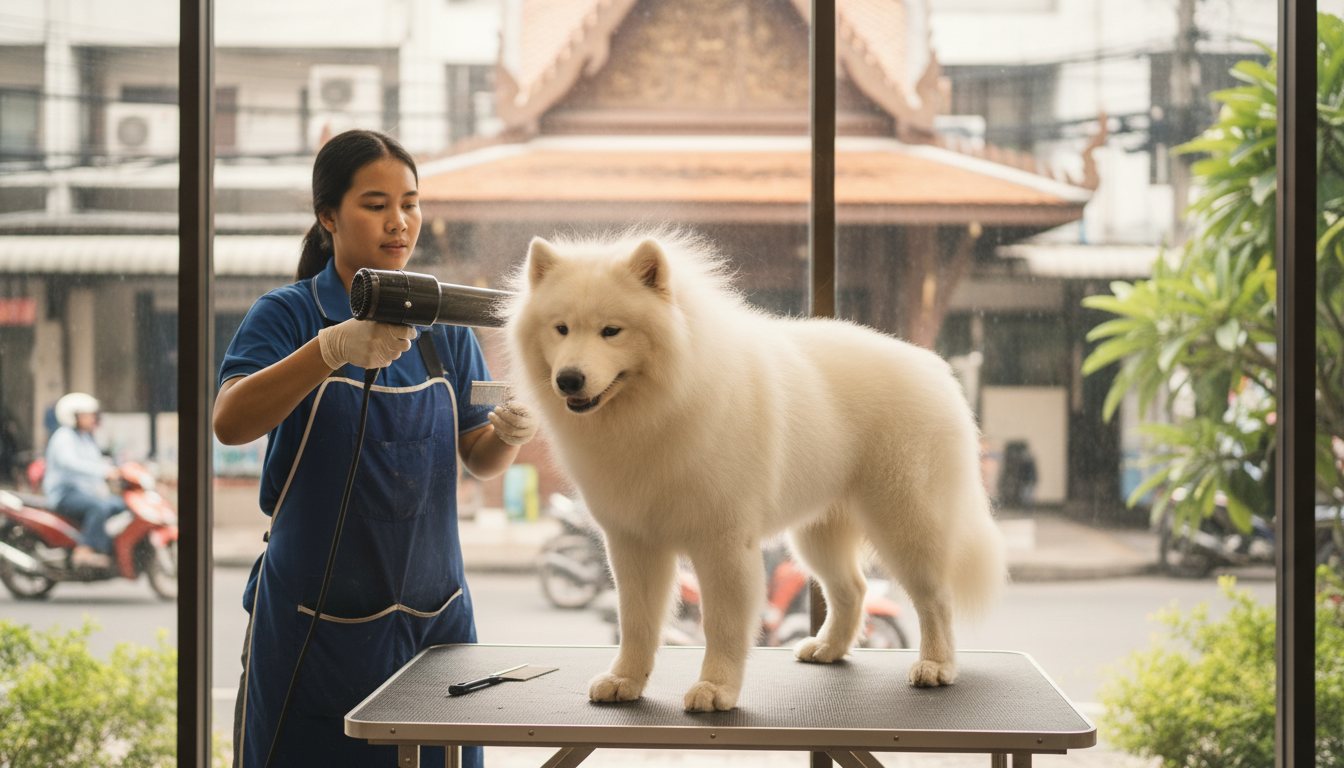
The absolute golden rule of tropical pet grooming is thorough drying. Never let a thick-coated dog or cat air-dry in a humid environment. Use a high-velocity pet dryer or a hair dryer on a cool setting to ensure the skin is completely dry down to the roots. For professional assistance with this crucial step, taking your pet to a professional groomer like Dog-Kun Grooming in the Prawet-Suan Luang area of Bangkok can ensure their undercoat is properly managed, brushed out, and dried to prevent painful hot spots.

Regular professional grooming also helps keep nails trimmed and ear canals clean, which are common areas for yeast infections to take hold during the humid monsoon months.
When to Visit the Vet
It can be difficult to know when simple home care is enough and when it is time to seek professional veterinary help. As a general rule, if your pet's scratching is disrupting their sleep, causing them to lose hair, or leading to open wounds, a vet visit is urgent.
Watch out for these warning signs:
- Red, inflamed, or bleeding skin
- Moist, weeping patches that smell sweet or musty (signs of yeast or bacterial infection)
- Constant head shaking or scratching at the ears
- Patches of hair loss (alopecia)
- Lethargy, loss of appetite, or irritability due to discomfort
Your veterinarian can perform diagnostic tests such as skin scrapings, tape impressions, or ear cytology to identify the exact cause of the itch. Trying to self-treat skin infections with human creams or unverified home remedies can often make the condition much worse. By working closely with a local vet clinic, you can develop a tailored management plan to keep your beloved pet comfortable, happy, and itch-free in our beautiful tropical home.
This guide is general information, not veterinary or legal advice. Rules, fees and requirements change: check with your vet or the relevant authority before you act.
Written by
Boba
Part of the Wagdee community of pet lovers in Thailand.
Keep reading
 Health & care
28 September 2026 · 4 min read
Rabies in Thailand: What Every Pet Owner Should Know
Protect your dog or cat from rabies in Thailand. Learn about annual boosters, emergency steps for animal bites, and keeping your pet's vaccination records up to date.
Boba Health & care
24 September 2026 · 5 min read
Heatstroke in Dogs: Spotting the Signs in a Thai Summer
As Thailand's hot season peaks, learn how to protect your dog from heatstroke, recognize the early warning signs, and take immediate life-saving action.
Boba Health & care
20 September 2026 · 4 min read
Ticks, Fleas, and Blood Parasites in Thailand: A Year-Round Guide
Protect your pets from Thailand's year-round tick and flea threat. Learn how to prevent blood parasites, spot early warning signs, and keep your home pest-free.
Boba