

 ไทย
ไทย
 Français
 Русский
 Deutsch
 Español
 中文
中文
 한국어
한국어
 日本語
日本語
Moving to Thailand with Your Pet: A Step-by-Step Guide
Planning a move to Thailand with your dog or cat? Learn the step-by-step process for a smooth relocation, from microchips and DLD permits to arrival tips.
Boba
2 October 2026 · 4 min read

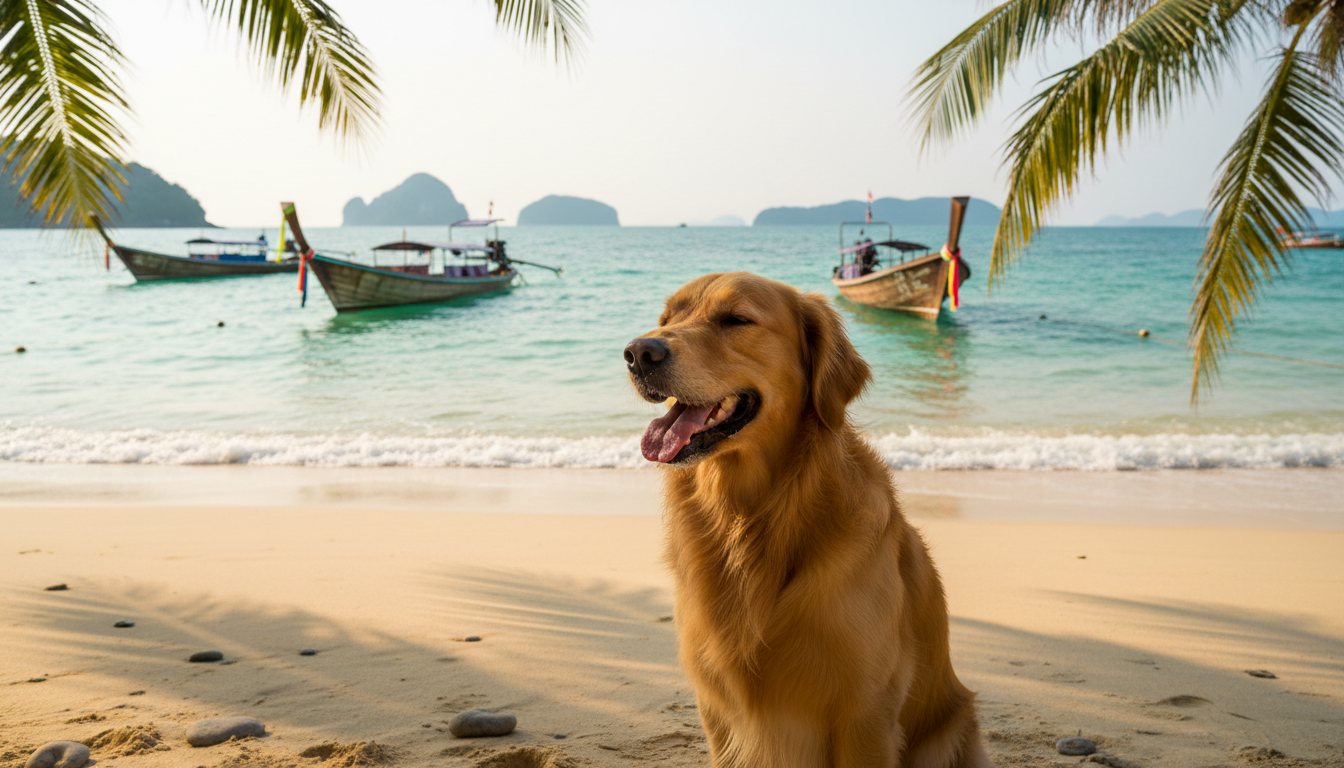
Relocating to the Land of Smiles is an incredible adventure. From the bustling, street-food-scented alleys of Bangkok to the serene, palm-fringed beaches of Phuket, Thailand offers a vibrant lifestyle that many expats dream of. But if you are a pet parent, that dream is only complete if your four-legged family member is right there beside you. Bringing a dog or cat into Thailand is entirely possible, but it requires navigating a strict timeline of veterinary procedures, government permits, and airline regulations. Because rules, fees, and airline policies can change with little notice, starting your planning at least three to four months in advance is the best way to ensure a smooth transition for both you and your pet.
Step 1: Microchipping and Vaccinations
Your pet's journey to Thailand begins at the veterinary clinic. Before any vaccinations or tests are administered, your dog or cat must be fitted with an ISO 11784/11785 compliant 15-digit microchip. If your pet has a non-standard microchip, you will need to bring your own scanner at every checkpoint, so getting the standard ISO chip is highly recommended.
Once the microchip is in place, the vaccination process can begin. Thailand requires a valid rabies vaccination. Crucially, the vaccine must be administered at least 21 days before your departure date, and typically within the last year. Your veterinarian must record the microchip number on all vaccination certificates. Depending on whether you are bringing a dog or a cat, other standard vaccinations are highly recommended and often required, such as Leptospirosis, Distemper, Hepatitis, and Parvovirus (DHP) for dogs, and Feline Panleukopenia, Calicivirus, and Rhinotracheitis (FVRCP) for cats. Always consult your vet to ensure your pet is healthy enough for travel and up to date on all regional preventative care.
Step 2: Obtaining the Import Permit
All pets entering Thailand must have an official Import Permit issued by the Department of Livestock Development (DLD). This is a crucial document that you must secure before your pet boards the plane. To apply, you will need to contact the Animal Quarantine Station (AQS) at your port of entry—most commonly Suvarnabhumi Airport in Bangkok or Phuket International Airport.
You should submit your application at least 45 to 60 days before your planned travel date. The application requires clear scans of your passport, a completed import application form, your pet’s microchip certificate, and up-to-date vaccination records. Because regulations and contact emails for the AQS can change, always check the official DLD website or contact the embassy for the most current submission procedures. Once approved, the permit is typically valid for 60 days from the date of issue.
Step 3: The Health Certificate and Endorsement
With your import permit in hand, you enter the final, time-sensitive stretch. Within 10 days of your departure, you must take your pet to an authorized veterinarian for a thorough clinical examination. The vet must certify that your pet is healthy, free of infectious diseases, and fit to travel.
This clinical examination forms the basis of the official Veterinary Health Certificate. In most countries, this certificate cannot just be signed by your private vet; it must be officially endorsed by the governing agricultural or veterinary authority of your home country (such as the USDA in the United States, CFIA in Canada, or DEFRA in the United Kingdom). Coordinating this endorsement within the strict 10-day window before your flight requires careful scheduling, so book these appointments well in advance.
Step 4: Selecting Your Airline and Crate
Choosing how your pet will fly is one of the most critical decisions you will make. Airlines have vastly different policies regarding pets: some allow small dogs and cats in the cabin, some accept them as checked baggage (excess baggage), and others require pets to travel strictly as manifest cargo.
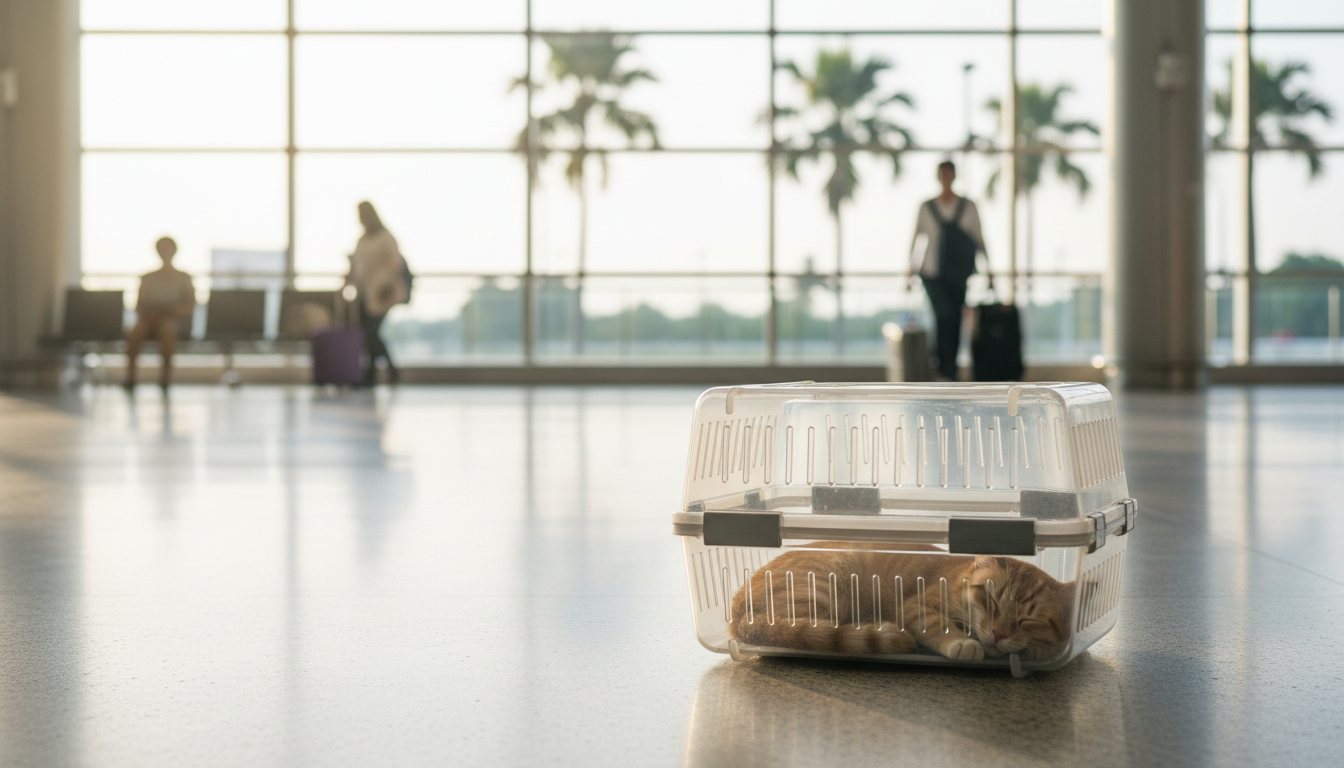
When planning your route, keep Thailand’s tropical climate in mind. The hot season, stretching from March to May, brings intense heat that can lead to airline-imposed temperature restrictions. Many airlines will not fly pets in the hold if temperatures at the departure, transit, or arrival airports exceed certain limits. Furthermore, you must invest in an IATA-compliant travel crate. The crate must be sturdy, well-ventilated, and large enough for your pet to stand up, turn around, and lie down naturally.
Step 5: Arrival Inspection and Settling In
When you finally land in Thailand, your first stop after clearing human immigration is the Animal Quarantine Station at the airport. Here, a DLD officer will inspect your pet, verify your original documents (including the import permit, health certificate, and vaccination records), and scan your pet's microchip.
There is an entry inspection fee, which must be paid in Thai Baht, so it is wise to exchange some cash immediately upon arrival. Once the officer clears your pet, you will proceed to the customs red channel to pay any applicable import duties before finally stepping out into the warm Thai air.
Adjusting to Thailand takes time. The humidity can be a shock to pets arriving from cooler climates. Keep walks short during the middle of the day, provide plenty of fresh water, and watch out for local "soi dogs" (street dogs) during your evening strolls. With patience, plenty of water, and a bit of time to adapt, your pet will soon be enjoying their new tropical lifestyle just as much as you are.
This guide is general information, not veterinary or legal advice. Rules, fees and requirements change: check with your vet or the relevant authority before you act.
Written by
Boba
Part of the Wagdee community of pet lovers in Thailand.
Keep reading
 Pets in Thailand
24 May 2026 · 4 min read
Bangkok's Best Dog Parks: A Guide to Play and Community
Discover Bangkok's top dog parks, essential hot-weather safety tips, local park etiquette, and an exciting upcoming community event for pet owners.
 Pets in Thailand
20 May 2026 · 4 min read
Condo Living with Pets in Bangkok: A Complete Guide
Navigating high-rise life with dogs and cats in Thailand's capital requires a mix of smart planning, safety measures, and neighborly respect.
 Pets in Thailand
13 April 2026 · 5 min read
Bangkok's Pet-Friendly Café Culture: A Guide for Owners
Discover the joy of Bangkok's pet-friendly café scene. Learn the difference between animal cafés and pet-friendly venues, essential etiquette, and how to keep your dog cool.