

 ไทย
ไทย
 Français
 Русский
 Deutsch
 Español
 中文
中文
 한국어
한국어
 日本語
日本語
Monsoon Season: Keeping Paws Dry and Skin Healthy
Protect your pet from tropical humidity, wet paws, and hidden street hazards during Thailand's rainy season with our expert care and grooming tips.
Boba
7 September 2026 · 4 min read
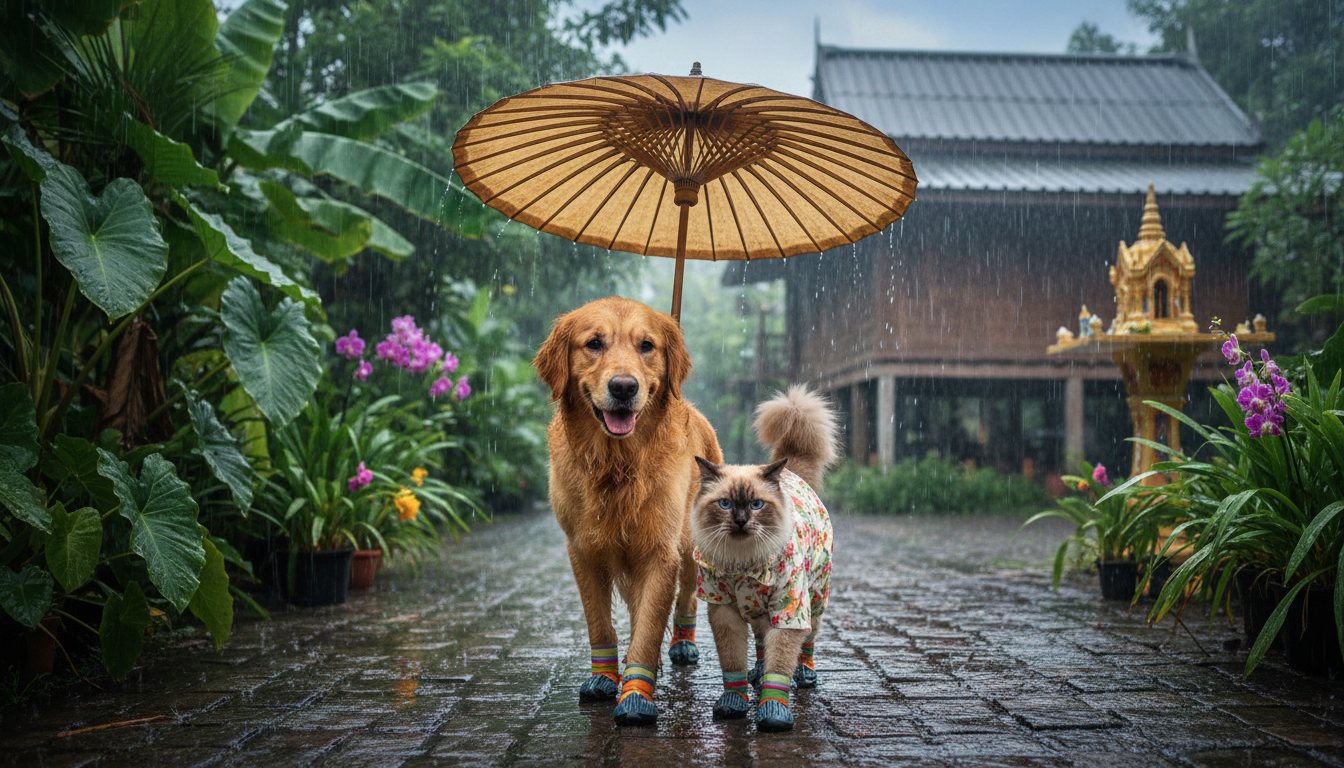
The sky darkens over Bangkok, Chiang Mai, or Phuket, and within minutes, the heavens open. The Thai monsoon season, running roughly from May to October, brings a welcome relief from the scorching heat, but it also introduces a unique set of challenges for pet owners. Between the sudden downpours, flooded sois, and relentless humidity, keeping our dogs and cats dry and healthy becomes a daily task. For our four-legged companions, the constant moisture is more than just an inconvenience; it is a breeding ground for skin irritation and infections. Understanding how to navigate this damp season is key to keeping your pets comfortable and active.
The damp threat: Fungal and bacterial skin issues
Under the tropical Thai sun, high humidity combined with wet fur creates a greenhouse effect on your pet's skin. When a dog or cat gets wet from rain or damp grass and is left to dry naturally, moisture gets trapped close to the skin. This warm, dark, wet environment is the perfect incubator for yeast and bacteria.
Common signs of skin issues include persistent scratching, red patches, a musty odor, and hair loss. 'Hot spots'—acute moist dermatitis—can develop rapidly, turning a small itch into a painful, weeping sore within hours. If you notice your pet constantly licking their paws or scratching their ears, it is time to take action. While mild irritation can sometimes be managed with soothing, pet-safe shampoos, any persistent or spreading skin issue requires a visit to your veterinarian for a proper diagnosis and targeted treatment plan.
The art of the dry: Paws, ears, and underbellies
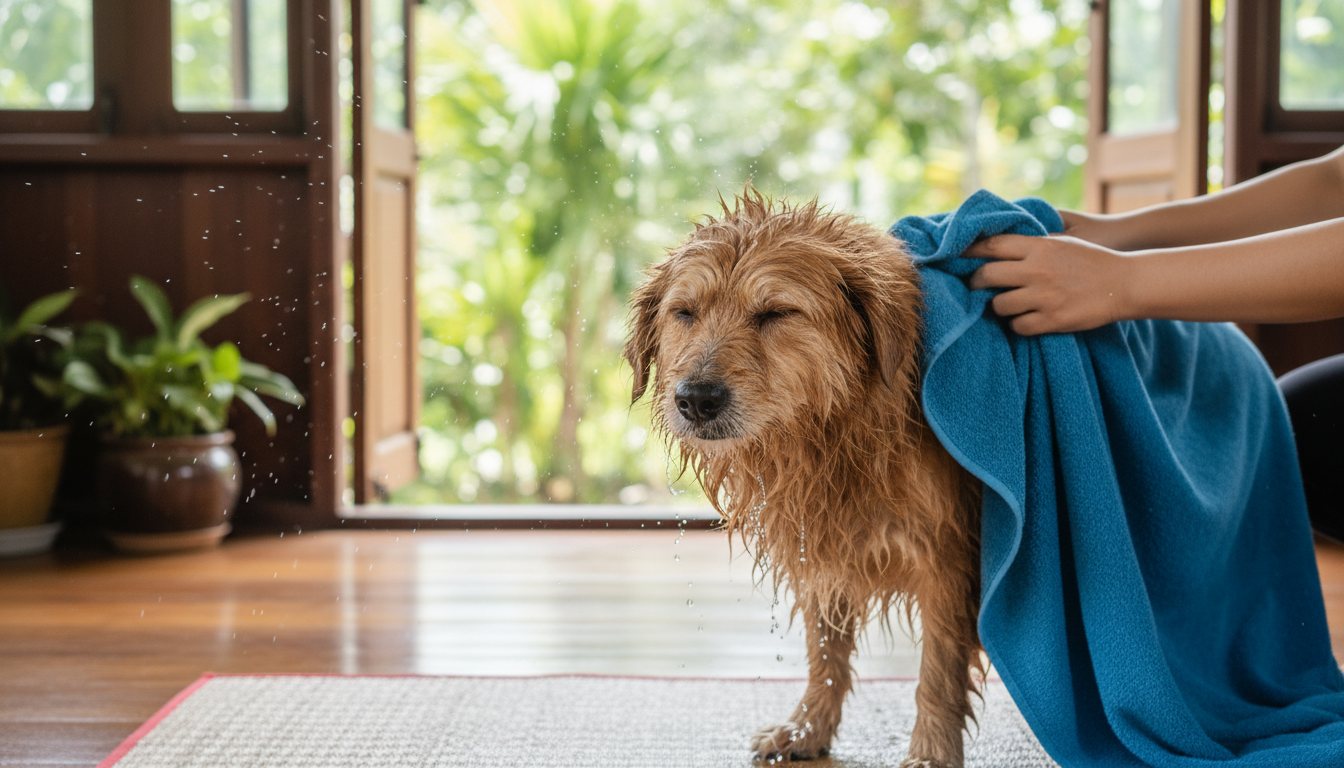
Preventing skin infections starts with a rigorous post-walk drying routine. Simply rubbing your pet down with a standard cotton towel is rarely enough in Thailand's thick humidity. You need to pay special attention to the hidden damp zones.
- Paw pads: The spaces between your pet's toes are highly susceptible to yeast infections. Dry each paw thoroughly, parting the toes to get to the skin underneath.
- Underbellies and armpits: Low-riding dogs and cats will collect water and mud on their bellies. Make sure to dry these friction-prone areas to prevent painful chafing.
- Ears: Floppy-eared breeds like Beagles or Spaniels trap moisture in their ear canals. After a walk in the rain, gently wipe the outer ear with a dry cloth. Never insert cotton buds deep into the ear canal; if you suspect water has gotten inside, consult your vet for a safe drying solution.
Using a hair dryer on a cool or low-heat setting can speed up the process, but always keep it moving to avoid burning your pet's sensitive skin.
Navigating the streets: Floodwaters and hidden hazards
Monsoon season in Thai cities often leads to localized street flooding, commonly known as nam thuan. While it might be tempting to let your dog splash through these temporary puddles, doing so carries significant health risks.
Urban floodwater is far from clean. It is a cocktail of street grime, sewer overflow, and chemical runoff. More importantly, standing water can harbor Leptospirosis, a dangerous bacterial disease shed in the urine of infected rodents. If your pet has any open cuts on their paws, wading through floodwater increases the risk of infection.
To keep your pet safe during the wet months:
- Avoid walking through deep puddles or flooded sois entirely.
- If your pet does come into contact with floodwater, wash their legs and paws with clean tap water and pet shampoo immediately upon returning home.
- Keep your pet's vaccinations up to date. Consult your local veterinarian or refer to guidelines from the Department of Livestock Development to ensure your dog is protected against waterborne diseases common in your area.
Smart grooming: Finding the right coat length
Managing your pet's coat length is a balancing act during the wet months. While it might seem logical to shave your dog or cat completely to make drying easier, this can actually backfire. A pet's coat acts as a natural barrier against insects, dirt, and moisture. Shaving them too close to the skin removes this protection and can make them more vulnerable to skin infections and sunburn on clear days.
Instead, opt for a functional 'sanitary trim' or a medium-length cut. Trimming the hair around the paws, underbelly, and rear end reduces the amount of mud and water your pet brings inside, making post-walk cleanup much quicker.
If you are unsure of the best style for your pet's specific breed and lifestyle, professional groomers can help. For pet owners in the Bangkok area, Dog-Kun Grooming in the Prawet-Suanluang district offers professional grooming services tailored to the local climate, helping to keep your pet's coat at the ideal length for the monsoon season.

Rainy day energy: Indoor exercise and mental stimulation
When the monsoon rains are relentless, outdoor walks might be off the table for days at a time. However, cooped-up pets can quickly become restless and destructive. Keeping them mentally stimulated indoors is just as important as physical exercise.

To burn off excess energy without getting wet, try these indoor activities:
- Interactive puzzle toys: Hide treats inside food puzzles to challenge your pet's brain.
- Scent games: Hide smelly treats around the living room and encourage your dog or cat to 'find it.'
- Indoor agility: Use cushions, cardboard boxes, and chairs to build a mini obstacle course in your hallway.
- Training sessions: Use the rainy days to practice basic commands or teach new tricks. Just fifteen minutes of focused mental training can tire a dog out as much as a short walk.
By adapting your routine, you can keep your pet happy, dry, and healthy until the blue skies return.
This guide is general information, not veterinary or legal advice. Rules, fees and requirements change: check with your vet or the relevant authority before you act.
Written by
Boba
Part of the Wagdee community of pet lovers in Thailand.
Keep reading
 Health & care
28 September 2026 · 4 min read
Rabies in Thailand: What Every Pet Owner Should Know
Protect your dog or cat from rabies in Thailand. Learn about annual boosters, emergency steps for animal bites, and keeping your pet's vaccination records up to date.
 Health & care
24 September 2026 · 5 min read
Heatstroke in Dogs: Spotting the Signs in a Thai Summer
As Thailand's hot season peaks, learn how to protect your dog from heatstroke, recognize the early warning signs, and take immediate life-saving action.
 Health & care
20 September 2026 · 4 min read
Ticks, Fleas, and Blood Parasites in Thailand: A Year-Round Guide
Protect your pets from Thailand's year-round tick and flea threat. Learn how to prevent blood parasites, spot early warning signs, and keep your home pest-free.