

 ไทย
ไทย
 Français
 Русский
 Deutsch
 Español
 中文
中文
 한국어
한국어
 日本語
日本語
Which Thai Fruits Are Safe for Dogs and Cats?
Discover which delicious tropical fruits from Thailand's local markets are safe for your dogs and cats, and which ones you must avoid at all costs.
Siriporn Boonmee
18 August 2026 · 4 min read
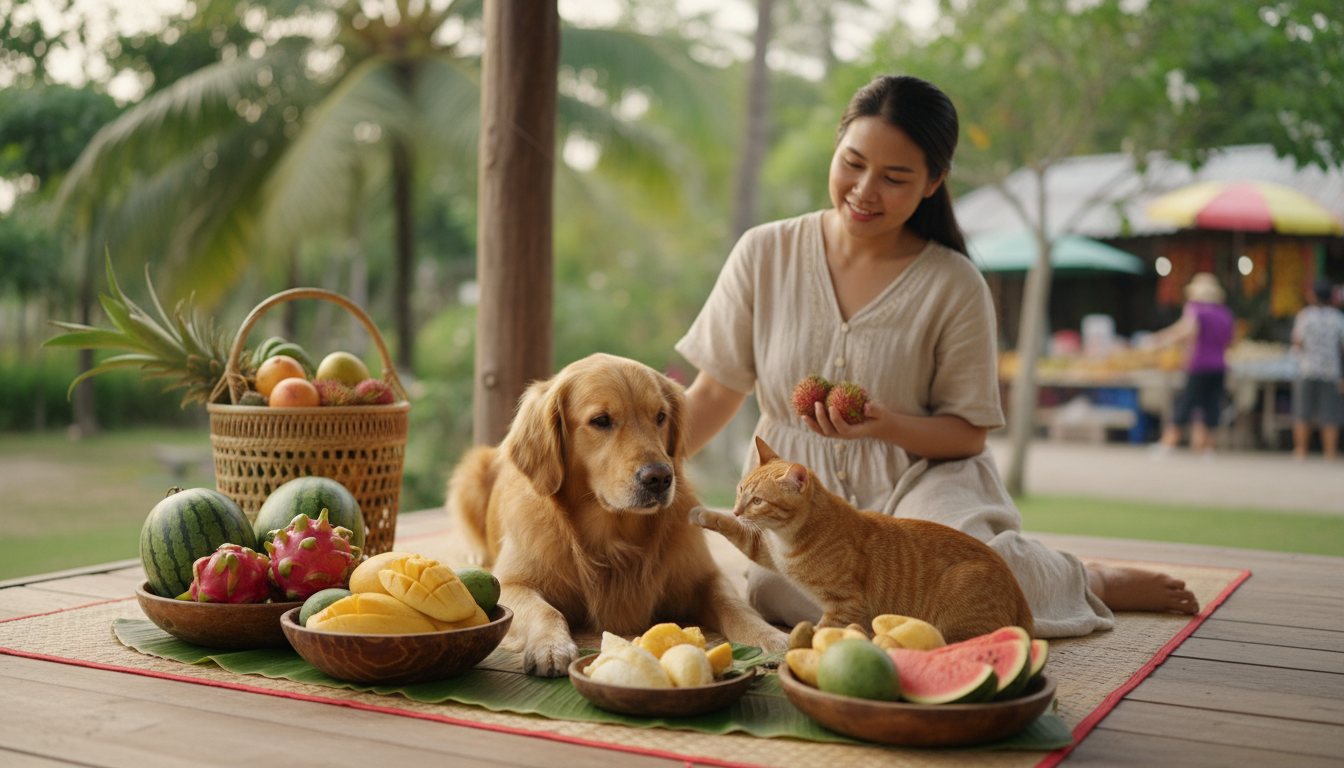
Walking down a bustling Bangkok soi or visiting your local talad (market), it is impossible to escape the vibrant sights and sweet aromas of Thailand's tropical fruits. From the iconic street carts with their glistening blocks of ice to the seasonal abundance of mangoes and durians, fruit is a central part of Thai daily life. When the midday heat climbs, it is only natural to want to share a cool, refreshing treat with your canine companion or feline friend. However, our pets process food very differently than we do. What is a healthy, hydrating snack for a human can sometimes lead to an emergency trip to the vet. Knowing which local fruits are safe and which ones are hazardous is essential for every pet owner in Thailand.

The Best Hydrating Choices for Hot Days
During the peak of the Thai summer, keeping your pets hydrated is a top priority. Fortunately, several common local fruits make excellent, cooling snacks when prepared correctly.
- Watermelon (Taeng Mo): This is the ultimate warm-weather treat for dogs. Made of over 90 percent water, it is fantastic for hydration. However, always remove all seeds (both black and white) to prevent intestinal blockages, and cut away the tough green rind which can cause choking.
- Mango (Ma Muang): Ripe mango is safe for dogs and cats in small amounts, offering vitamins A, B6, C, and E. Always peel the skin and never let your pet chew on the large inner pit, which is a major choking hazard and contains trace cyanide. Because mango is high in natural sugars, keep portions very small.
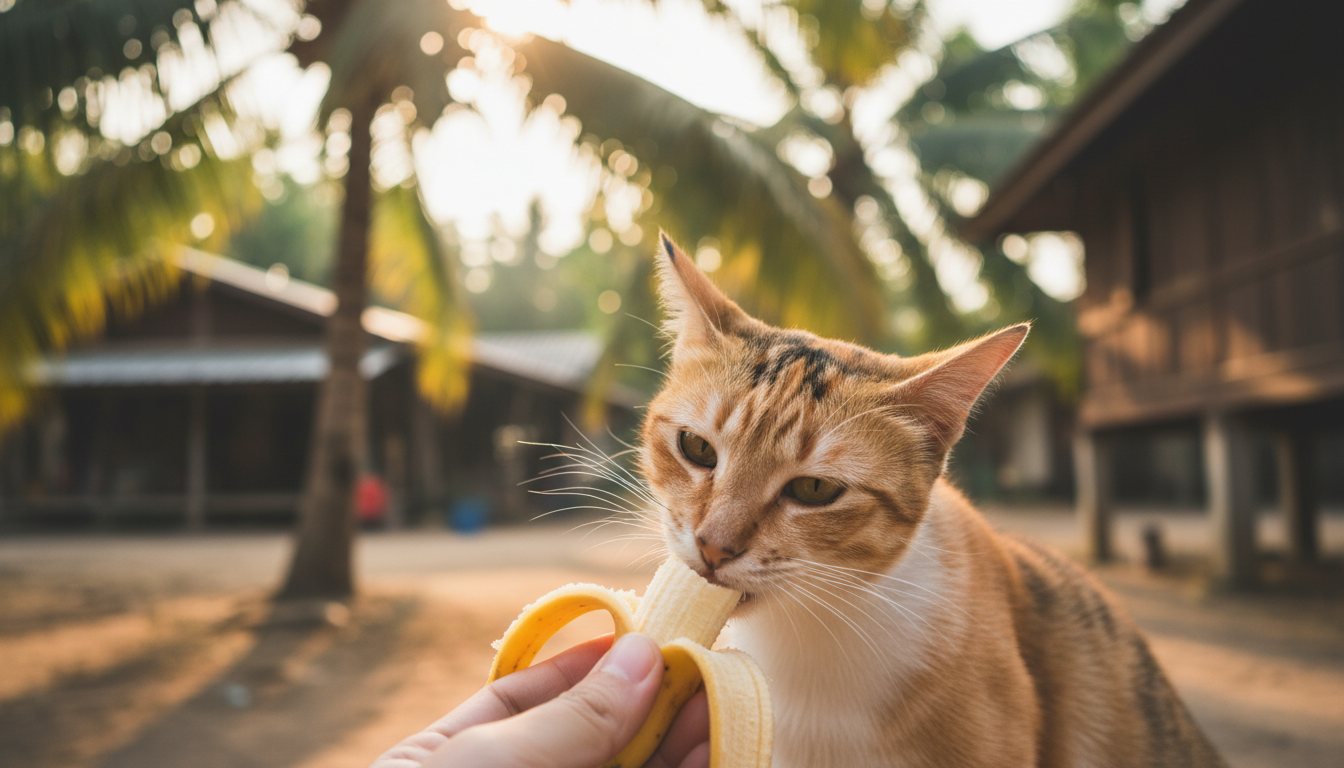
- Banana (Kluay): Bananas are rich in potassium and fiber. A small slice of kluay nam wa makes a wonderful occasional treat for active dogs. Felines rarely show interest, but a tiny bite is harmless. Since bananas are starchy and sugary, offer them only as a rare reward.
Tropical Fruits to Serve with Extra Care
Some fruits require meticulous preparation before they can be considered safe for your pets. If you are ever in doubt, it is best to consult your local veterinarian first.
- Papaya (Malakor): Ripe papaya flesh contains beneficial digestive enzymes and vitamins. If you want to share a bite, you must scrape away every single black seed and peel the skin entirely. Papaya seeds can cause digestive blockages and contain compounds that are difficult for pets to process. Never feed your pet raw, green papaya—such as the kind used in som tum—as it is far too tough and fibrous.
- Pineapple (Sapparot): This sweet and tangy fruit is safe for pets in very small quantities. You must completely cut away the prickly outer skin and the hard, fibrous central core. Only feed the soft, ripe flesh. Because pineapple is highly acidic and sugary, feeding too much can quickly lead to an upset stomach or diarrhea.
The Danger of Small Stone Fruits and Durian
Many of Thailand's most famous seasonal fruits present hidden dangers that make them unsuitable for pets, even if the fruit pulp itself is not inherently toxic.
- Rambutan (Ngoh), Longan (Lamyai), and Lychee (Linchee): During the monsoon season, these sweet fruits are everywhere. While a tiny speck of the flesh is not toxic, these fruits are highly dangerous. The primary threat is the seed. The pits of longan, lychee, and rambutan are the perfect size to lodge in a pet's throat or digestive tract, especially for popular small breeds like Chihuahuas or Pomeranians. Furthermore, the seeds contain toxic compounds, and the leathery skins are completely indigestible.
- Durian (Thurian): The "King of Fruits" is famous for its rich, custard-like texture. While durian flesh is not strictly poisonous to dogs or cats in minute amounts, it is extremely dense, high in fats, and loaded with sugars. Feeding durian to your pet can trigger severe acute pancreatitis, a painful and potentially life-threatening condition. Additionally, the massive, hard seeds are highly toxic and pose a severe choking risk. Keep durian completely off your pet's menu.
The Absolute No-Go List: Toxic Fruits
There are certain fruits commonly found in Thai households that you must never feed to your dogs or cats under any circumstances.
- Grapes and Raisins (A-ngun): Grapes are highly toxic to both dogs and cats. Even a single grape or raisin can cause sudden, acute kidney failure. The exact toxic agent remains unknown, meaning there is no safe dosage. Keep all grape varieties, including the seedless green and red varieties found in local supermarkets, completely out of reach.
- Avocado (Aw-wo-ka-do): Increasingly popular in modern Thai cafes, avocados contain a toxin called persin. While dogs and cats are somewhat resistant to persin, consuming avocado can still cause mild to severe stomach upset, vomiting, and diarrhea. More importantly, the massive central pit is an extreme choking hazard and can easily cause a fatal intestinal blockage.
Practical Tips for Thai Pet Owners
When offering any safe fruit to your pet, always remember that treats should make up no more than ten percent of their daily caloric intake.
Because local agricultural practices in Thailand often involve pesticides, it is crucial to wash all fruits thoroughly under clean, running water before preparing them. If you want to give your dog a special treat on a humid afternoon, try freezing small, safe chunks of watermelon or mango. These icy bites provide a refreshing way to lower their body temperature.
Every animal is an individual. Pets with pre-existing health conditions, such as diabetes, obesity, or kidney disease, should avoid fruits entirely due to the natural sugar and potassium content. Always consult your local veterinarian before introducing any new foods into your pet's diet. If you suspect your pet has ingested an unsafe fruit, a toxic seed, or a tough rind, do not wait for symptoms to appear. Contact your nearest emergency veterinary hospital immediately for professional guidance.
This guide is general information, not veterinary or legal advice. Rules, fees and requirements change: check with your vet or the relevant authority before you act.
Written by
Siriporn Boonmee
Part of the Wagdee community of pet lovers in Thailand.
Keep reading
 Food & nutrition
26 August 2026 · 4 min read
Thai Street Food Your Dog Must Never Eat
Thai street food is legendary, but many common local dishes contain ingredients that are highly toxic to dogs. Here is what to keep away from your pup.
 Food & nutrition
22 August 2026 · 4 min read
Fresh Food or Kibble? Feeding Pets in a Hot Climate
Discover the pros and cons of fresh food and kibble in Thailand's tropical climate, and learn how to protect your pet's meals from humidity, mold, and ants.
 Food & nutrition
14 August 2026 · 4 min read
Keeping Pets Cool: Essential Hydration Hacks for Thailand's Heat
Beat the Thai heat with these practical, expert-approved hydration tips and hacks to keep your dogs and cats safe, healthy, and happy all year round.